Building rules
Many condo and apartment buildings ask for advance notice, a reserved service elevator or the contractor's details before a repair visit. Check with management before you book a time.
Inside Miami's city limits, most homes are apartments and condos, and most residents rent. This guide covers what that means when a refrigerator, washer, dryer or dishwasher breaks down, and how one call connects you with an independent local contractor.
The City of Miami is the incorporated city at the center of Miami-Dade County. Its neighborhoods run from Downtown and Brickell to Little Havana, Allapattah, Wynwood, Edgewater, Little Haiti, Coconut Grove and Flagami. Many people say “Miami” for the whole county, but this page is about the city itself. For the wider area, see our homepage and the full list of locations.
City of Miami homes are some of the most varied in the county. Waterfront high-rises sit a few blocks from small apartment buildings, duplexes and older single-family streets. The appliance problems are the same everywhere: warm refrigerators, leaking washers and slow dryers. What changes is who arranges the repair and how the contractor gets in.
The U.S. Census Bureau's American Community Survey (2020–2024 estimates) counts about 223,800 homes in Miami, with roughly 459,700 residents. About 22% are single-family detached houses, 9% are attached homes such as townhouses, and 68% are in buildings with two or more units, including 40% in large buildings of 50 or more units.
The median home in Miami was built in 1979, so many kitchens and laundry areas have been remodeled at least once. Appliance openings, water lines and dryer vent routes don't always match today's standard sizes, so measuring the space and noting anything unusual helps the contractor come prepared.
Renters make up about 69% of occupied homes. If you rent, check your lease and contact your landlord or property manager before arranging a repair, because many leases say who is responsible for appliances. If you own your home, or your landlord asks you to arrange the visit, one call connects you with an independent contractor.
Many condo and apartment buildings ask for advance notice, a reserved service elevator or the contractor's details before a repair visit. Check with management before you book a time.
In multi-unit buildings, a leaking washer, dishwasher or refrigerator water line can reach the unit below. Know where your unit's shut-off valves are.
Census estimates show that about four in ten homes in the city are in buildings with 50 or more units. In those buildings a repair visit is part appliance problem and part logistics. Ask the front desk or management how contractors check in, whether the service elevator needs to be reserved, and whether work is limited to certain hours. Have those answers ready when you call so the contractor can plan the visit.
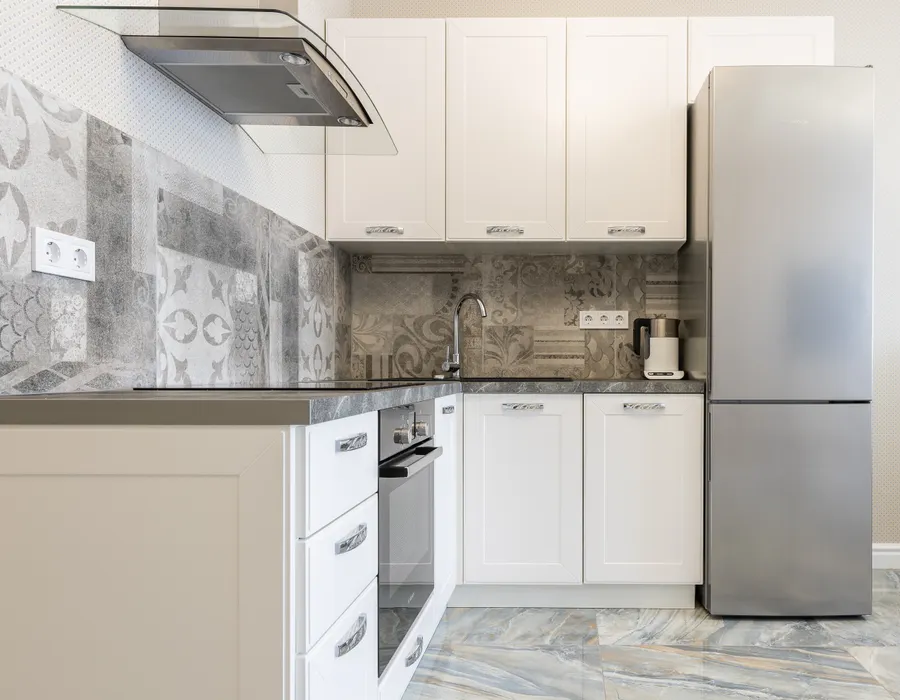
Space is the other factor. City apartments often fit a stacked washer-dryer into a closet or put a slim, counter-depth refrigerator in a galley kitchen. Note the exact model number, measure the opening, and say whether the unit is built in. Removing trim panels or sliding a built-in out of its opening takes time, and contractors appreciate knowing in advance.
Because most City of Miami households rent, the first call is often to the landlord. Many leases make the property owner responsible for appliances that came with the unit. If the appliance is yours, or your landlord asks you to set up the repair, we'll connect you with an independent contractor who serves your ZIP code.
These are the four appliances we connect homeowners for. Each guide explains common problems, safe checks and when to call.
Not cooling, leaking, ice maker problems or new noises. Built-in and counter-depth models are common in condo kitchens; mention it if yours sits flush with the cabinets.
Refrigerator repair guideWon't drain or spin, leaking, shaking or not starting. Stacked and compact washers are common in condo closets; note the exact model and how the unit is installed.
Washer repair guideNo heat, long drying times, loud noises or not starting. Some buildings maintain shared dryer ducts; ask management who cleans the duct for your unit.
Dryer repair guideNot draining, not cleaning, leaking or showing an error code. If you see water, turn off the supply valve under the sink; leaks can reach the unit below.
Dishwasher repair guideThese ZIP codes overlap Miami in Census Bureau ZIP code area data and are on our current coverage list. Parts of 33126, 33134, 33138, 33142, 33144, 33147 and 33150 also fall inside city limits and are on the list too.
Yes. The homepage covers appliance repair across the Miami area as a whole. This page is about homes inside the City of Miami's limits, where most residents rent and many live in larger buildings, so the guidance focuses on building access, compact appliances and landlord responsibilities.
Stacked washer-dryer pairs and compact laundry units are common in city apartments, and many contractors work on them. When you call, give the brand and model number and say how the unit is installed, so you can confirm the contractor handles that type.
Ask how contractors check in, whether the service elevator needs to be reserved, and whether repairs are limited to certain days or hours. Some buildings also ask for the contractor's details in advance.
Our current coverage list includes 33125, 33127, 33128, 33129, 33130, 33131, 33132, 33133, 33135, 33136, 33137 and 33145, which overlap Miami according to Census Bureau ZIP code area data. Parts of 33126, 33134, 33138, 33142, 33144, 33147 and 33150 also fall inside city limits and are on the list too. Coverage can change, so enter your ZIP code in the checker on this page each time you need help.
Yes, but check your lease first. About 69% of homes in Miami are rented, and many leases say the landlord or property manager arranges appliance repairs. If you're responsible for the repair, call and we'll connect you with an independent contractor.
One call connects you with an independent repair professional serving your Miami ZIP code.